Why Pray Only in Arabic?
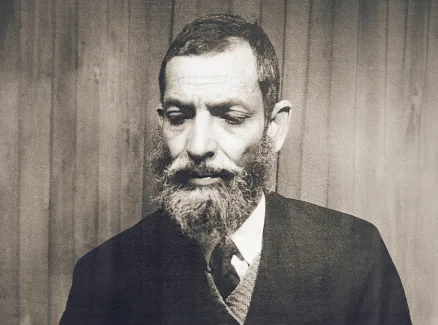
By Professor Muhammad Hamidullah
France-Islam, n°1, p. 9, March 1967
---
It is well known that during their prayer services (salât, in Arabic), which include certain symbolic accompanying gestures, Muslims use exclusively the Arabic language, they recite certain passages from the Quran and pronounce certain formulas to attest to the sublimity of God and the humility of man.
Both Arabs and non-Arabs do so, even those among them who do not understand a word of this language. It was so at the time of Prophet Muhammad — may God bless him — and it has always been so, regardless of the era, the country, or the mother tongue of the Muslim.
At first glance, it would seem normal and even desirable for the believer to address their prayers to the Lord in full consciousness of what they are saying. Naturally, the mother tongue is the most appropriate vehicle for this purpose, and one would wish that the service be celebrated in as many languages as are spoken by Muslims in the four corners of the world. But a more thorough consideration shows that there are reasons that strongly militate against such a solution.
First, a metaphysical or psychological point. According to the Holy Quran (33:6), the wives of the Prophet are the Mothers of the Muslims. We know that all these revered ladies spoke Arabic. Therefore, Arabic is the mother tongue of all Muslims. Who then can object to celebrating the service in their mother tongue?
This argument may not suffice to convince everyone. Pushing the study further, it should be noted that according to Islamic belief, the Quran constitutes the Word of God whose recitation is considered by the Quran as something meritorious. From a spiritual point of view, the believer travels towards God by means of His own holy word.
The original word revealed to the Prophet of Islam was made in Arabic. Whatever the translation, it will be a human work and a human word. And this can hardly serve the purpose of this mystical and spiritual journey, accomplished through prayer, towards God.
For those who would seek a more down-to-earth reason, let us first recall that a very clear distinction must be made between prayer in the sense of supplication (du'â) and prayer in the sense of the office of worshipping God (salât).
As for du'â, that is, prayer in general and outside the formal way of worshipping God, the private conversation of man with his Lord (munâjât), no one has ever raised the slightest objection to the absolute freedom of the individual to address their needs, their petition to the Lord in whatever language and physical attitude they prefer. This is a personal and private matter concerning the particular relationship of the individual creature with their Creator.
But salât, on the contrary, is a collective and public matter, where the needs of other prayer companions in common must obviously be taken into consideration. It should therefore be particularly noted that salât must in principle be celebrated in common and with others (jamâ'a); celebrating salât individually and in isolation is permitted, but never recommended, the preference being solely for the common service led by an imam.
If Islam were a regional, racial, or national religion, the language commonly spoken in that region, by that race, or that nation would certainly have been used. But quite different are the needs of a universal religion, whose faithful speak hundreds of regional languages — none of which is understandable to any of the other human groups — and belong to all races, residing in all regions of the earth.
Our life is each day more cosmopolitan and practically every city on the globe hosts Muslims from different linguistic groups.
Practically no religion on earth, with the exception of Islam, possesses today the complete original of the Revelation on which that religion is based, the original of the teachings of its founder; either it is the translation or, at most, fragments of the original that Christians, Jews, Zoroastrians, and other communities have.
What happiness for Muslims who are the only exception to this fact and who possess in its entirety the original text of their revelation, the Holy Quran.
Moreover, the Quran, although in prose, possesses all the qualities and charm of poetry, such as rhythm, resonance, grandeur of style, etc., to the point that the omission or addition of even a single letter disturbs it as it would disturb the hemistich of a verse.
Personally, the author of these lines thinks that no Muslim would ever show the same respect for a translation of the Quran as they reserve for the original text revealed by God to His messenger. For the translation would be the work of an ordinary man, and not that of an infallible one protected from error by God, as is the case with a Prophet.
Finally, there are writers who point out in support of their view that authorities such as Imam Abû Hanîfa (died 767) were of the opinion that the recitation of the translation of the Quran should be permitted in the prayer service. But this is a half-truth.
These writers fail to mention that Imam Abû Hanîfa, although he had this opinion at the beginning, later abandoned it and rallied to the opinion of others (a fact that is expressly mentioned in the authoritative manuals on Hanafi law, such as the Hidayâ of al-Marghînânî, the al-Durr al-mukhtâr of al-Haskafî among others) and Abû Hanîfa also said that in normal situations it is only the Arabic text that should be used in prayer services. Certainly, there are provisions for exceptional cases, such as the needs of a new convert to Islam; they have the duty to immediately begin the celebration of the five daily prayer services, in which it is obligatory to recite certain Arabic formulas by heart.
So until they learn the prescribed formulas by heart, they have permission to say the meaning of these formulas in another language that is practical for them. For this we have the high precedent of Salmân al-Fârisî, who translated Surah al-Fâtiha into Persian to send to certain Persian converts, with the approval of the Prophet himself. And these Persians used this translation until their tongues became familiar with the Arabic text.
Thus, for a few hours or a few days, new converts can validly use the translation.
It follows from the above that every Muslim, given their veneration for the Quran, always opts for Arabic, the mother tongue of the Prophet. Thus, Islam constitutes the source of life for the Arabic language.
---
Reference: Original article published in France-Islam, n°1, p. 9, March 1967
Professor Muhammad Hamidullah (1908-2002)
Interested in our programs?
Contact us to learn more about our learning packages in Madinah.
 WhatsApp