The History of Arabic Language: A Sacred and Ancient Language
The Arabic language is one of the oldest and most influential languages in the world. A Semitic language belonging to the Afro-Asiatic family, it is today the most widely spoken Semitic language on earth, with over 400 million speakers.
The Origins of Arabic Language
A millennial history
The history of Arabic dates back over a millennium, with its roots deeply anchored in the Arabian Peninsula. The earliest traces of the language date from the 8th century BCE, but it was between the 3rd and 6th centuries CE that the language experienced its most significant development.
The Arabic alphabet itself evolved from a Nabataean variation of the Aramaic alphabet, which descended from the Phoenician alphabet. This progressive evolution gave birth to the beautiful Arabic calligraphy we know today.
From Bedouin dialects to Classical Arabic
The Arabic language finds its origin in the dialects spoken by the nomadic Bedouin tribes of the Arabian Peninsula. These tribes, traveling across the desert, naturally spread and enriched the language through their encounters and commercial exchanges.
Who Mastered the Arabic Language Best?
The Quraysh Tribe: Masters of Eloquence
Among all Arab tribes, the Quraysh tribe is historically recognized as the most eloquent. Their dialect formed the basis of Classical Arabic, in which the Holy Quran was revealed.
Abu Nasr al-Farabi, a famous Muslim scholar, described them as:
"The finest tribe among all of the Arab tribes in selecting the most eloquent and the easiest word on the tongue in the pronunciation, the best in the hearing and the most excellent in the explanation of what was in the soul."
Why Were the Quraysh So Eloquent?
Several factors explain this linguistic excellence:
Prophet Muhammad ﷺ: Eloquence Par Excellence
Prophet Muhammad ﷺ, a member of the Banu Hashim clan of the Quraysh tribe, is implicitly recognized as the pinnacle of Arabic eloquence. The Quran, revealed in his native dialect, is considered the most perfect work of Arabic literature.
The Importance of Arabic in Islam
The Language of Divine Revelation
Arabic occupies a unique and irreplaceable place in Islam because it is the language in which:
The Quran is the direct word of Allah, revealed in Arabic. This sacred status confers upon the Arabic language a sanctity that translations cannot reproduce.
Preservation Through the Centuries
Muslim scholars played a crucial role in preserving the Arabic language through:
A Unifying Force
Arabic unites over one billion Muslims around the world. Whether a Muslim is in Indonesia, Morocco, or France, they recite their prayers in the same language, creating a universal spiritual bond.
The Islamic Golden Age: Arabic, the Language of Knowledge
From the 8th to the 13th Century
During the Islamic Golden Age, Arabic became the "lingua franca" of world knowledge. It was the main language of:
The Translation Movement
A major translation movement saw Greek, Roman, and Persian works translated into Arabic. These texts, which could have been lost, were preserved and enriched by Muslim scholars in centers like the House of Wisdom (Bayt al-Hikma) in Baghdad.
Arabic scientific terms passed into European languages: algebra, algorithm, alcohol, zero (sifr)...
Why Learn Arabic Today?
To Understand the Quran in Its Original Language
No translation can fully capture the beauty, depth, and nuances of the Quranic text. Learning Arabic allows direct access to the divine word.
To Follow in the Footsteps of Scholars
As 'Umar Ibn Al-Khattab رضي الله عنه said:
"Learn the Arabic language, for it is part of your religion."
For Complete Spiritual Immersion
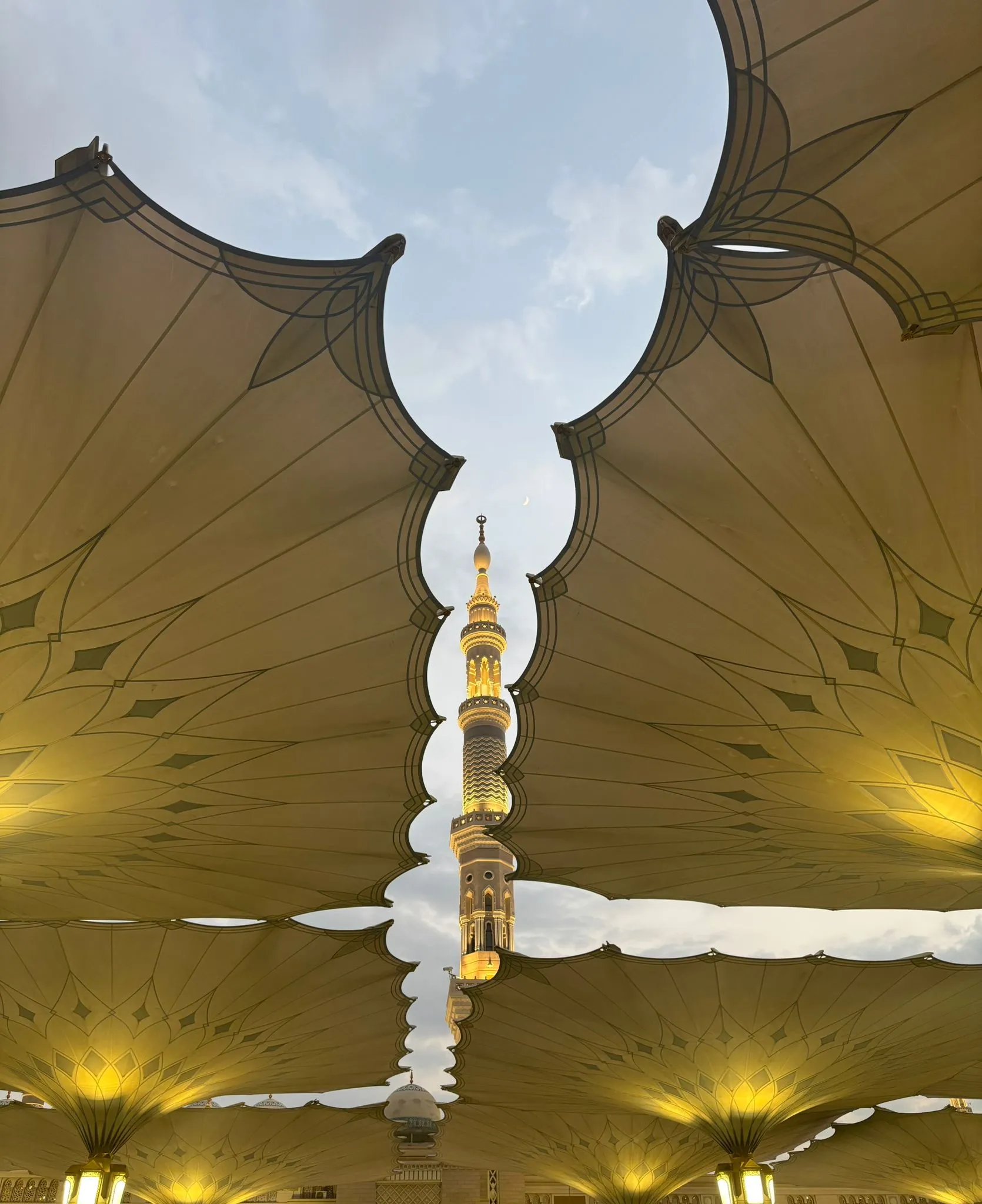
Learning Arabic in Madinah, in the city of the Prophet ﷺ, means combining linguistic learning with an incomparable spiritual experience.
Conclusion
The Arabic language is not simply a communication tool: it is a spiritual, intellectual, and cultural heritage that has shaped Islamic civilization for over 14 centuries. Learning it means connecting to this millennial tradition and opening the doors to an authentic understanding of Islam.
---
Sources: Renaissance Translations, IslamWeb, Muslim Heritage, Encyclopedia Britannica, Islamic University of Madinah
Interested in our programs?
Contact us to learn more about our learning packages in Madinah.
 WhatsApp